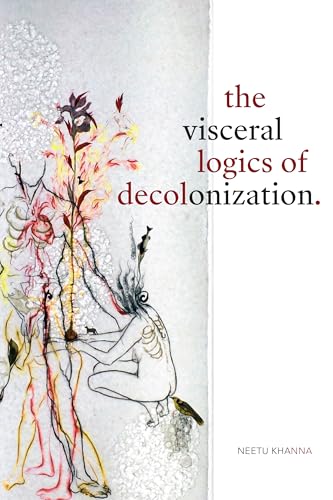
The visceral logics of decolonization / Neetu Khanna.
Material type: Text Durham ; London : Duke University Press, 2020Description: xii, 183 p. ; 24 cmISBN:
 - 9781478007739
- 9781478008170
- 891.4 23
| Item type | Current library | Call number | Status | Barcode | |
|---|---|---|---|---|---|
 Books - Open Access
|
CHUSS- Arts Library | 891.4 KHA (Browse shelf(Opens below)) | Available | 001280847 |
Includes bibliographical references (pages 161-174) and index.
Introduction: The visceral logics of decolonization -- Agitation -- Irritation -- Compulsion -- Evisceration -- Coda: Explosion.
"The visceral logics of decolonization offers a question that shapes Khanna's primary decolonial intervention in this book: "What would it mean to undo the visceral lessons of colonialism in the habits of mind and emotive reflex of the postcolonial subject?" For Neetu Khanna the a nswers to this question are lodged within the artistic renderings of th e Progressive Writer's Association, an anti-colonial, anti-orthodox Mus lim writer's collective. Drawing on the work of Fanon, as well as queer and feminist theory, Khanna thinks through how affect circulates withi n anti-colonial struggle. Using the archives of Indian Marxist movement s between the 1930s and the 1960s, Khanna theorizes the concept of "the visceral" as an embodied habit and feeling that emerges at the junctur e of colonialism and nationalist movement. She argues that this affecti ve corporeality shapes utopic visions of freedom for the gendered, colo nial, Indian, citizen subject as they are imagined in the artistic expe rimentation of Indian progressive political movements. In chapter 1, Kh anna begins describing the visceral inquiries of the book to explore th e form and phenomenology of nationalist emotion as it emerges in Indian struggles for decolonization. Khanna locates the somatic unconscious i n the tensed musculature of the politically agitated revolutionary subj ect and sets up this framework that is used throughout the rest of the book. Chapter 2 brings into focus the revolutionary promise of "the vis ceral" within the internationalist imaginary, which makes possible the transformation of feeling and consciousness. The female body comes into focus in chapter 3, highlighting how women's bodies become the focal o bjects of violent subjection by both colonial and anti-colonial nationa list regimes of discipline. Khanna discusses writer Ahmed Ali and The A ll-India Progressive Writers Association in chapter 4, and shows how vi sceral eruptions propel the engine of the national teleology of the pro gressive novel moving through mourning, grief, nostalgia, melancholy, a nd lamentation - necessary elements for revolutionary transformation. T he book ends with a chapter about Fanon, returning to the anti-colonial theories of the most canonized figure in postcolonial studies and stud ies of decolonization through the alternative genealogy of the visceral opened up by the Progressive Writers movement. This book will be of in terest to scholars in South Asian studies, post-colonial theory, and hi story"-- Provided by publisher.
There are no comments on this title.