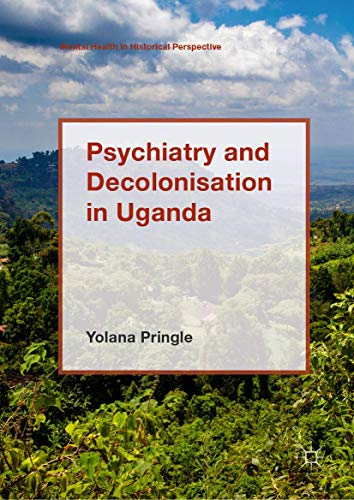
Psychiatry and Decolonisation in Uganda / by Yolana Pringle.
Material type: TextSeries: Mental Health in Historical Perspective | Mental Health in Historical Perspective London : Palgrave Macmillan UK : Imprint: Palgrave Macmillan, 2019Edition: 1st ed. 2019Description: xii, 259 pages; 22 cmISBN:
 - 9781137600943
- 960 23
| Item type | Current library | Call number | Status | Barcode | |
|---|---|---|---|---|---|
 Books - Open Access
|
CHUSS- Arts Library | 960 PRI (Browse shelf(Opens below)) | Available | 001238390 | |
|
Books - Open Access
|
CHUSS- Arts Library | 960 PRI (Browse shelf(Opens below)) | Available | 001238391 | |
|
Books - Open Access
|
CHUSS- Arts Library | 960 PRI (Browse shelf(Opens below)) | Available | 001238393 | |
|
Books - Open Access
|
CHUSS- Arts Library | 960 PRI (Browse shelf(Opens below)) | Available | 001238424 | |
|
Books - Open Access
|
CHUSS- Women and Gender Studies Library | 960 PRI (Browse shelf(Opens below)) | Available | 001238877 | |
|
Books - Open Access
|
CHUSS- Women and Gender Studies Library | 960 PRI (Browse shelf(Opens below)) | Available | 001238878 |
1. Introduction -- 2. A Place on Mulago Hill -- 3. The 'Africanisati on' of Psychiatry -- 4. 'Mass Hysteria' in the Wake of Decolonisation - - 5. The Psychiatry of Poverty -- 6. Mobility, Power, and International Mental Health -- 7. The 'Trauma' of War and Violence -- 8. Conclusion. -Bibliography -- Index .
This open access book investigates psychiatry in Uganda during the y ears of decolonisation. It examines the challenges facing a new generat ion of psychiatrists as they took over responsibility for psychiatry at the end of empire, and explores the ways psychiatric practices were ti ed to shifting political and development priorities, periods of instabi lity, and a broader context of transnational and international exchange . At its heart is a question that has concerned psychiatrists globally since the mid-twentieth century: how to bridge the social and cultural gap between psychiatry and its patients? Bringing together archival res earch with oral histories, Yolana Pringle traces how this question came to dominate both national and international discussions on mental heal th care reform, including at the World Health Organization, and helped spur a culture of experimentation and creativity globally. As Pringle s hows, however, the history of psychiatry during the years of decolonisa tion remained one of marginality, and ultimately, in the context of war and violence, the decolonisation of psychiatry was incomplete.
Description based on publisher-supplied MARC data.
There are no comments on this title.